
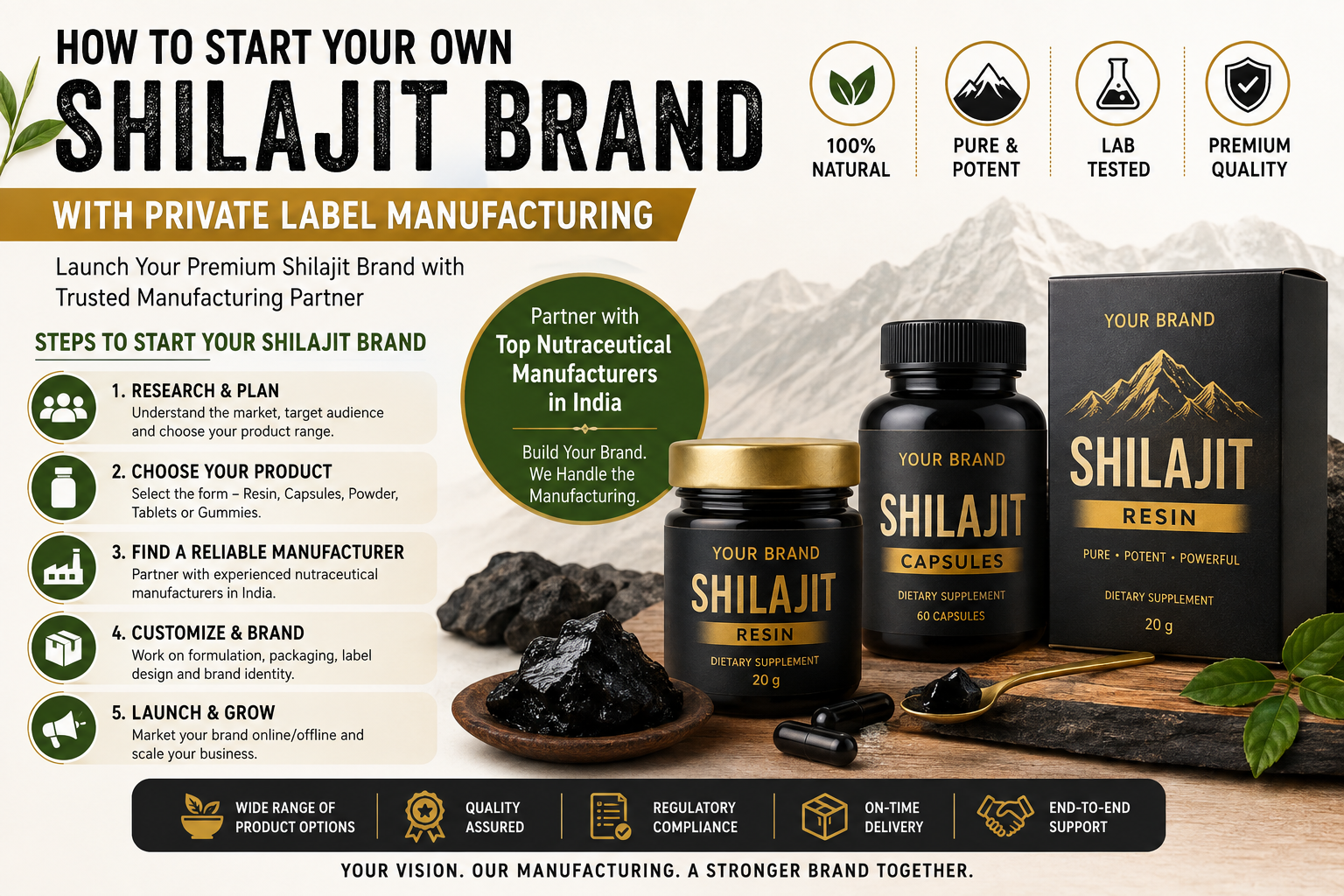
Shilajit has become a popular wellness supplement among people looking for natural ways to support energy, stamina, strength, and overall well-being. As interest in traditional and natural wellness products grows, starting your own Shilajit brand can be an exciting business opportunity.
But creating a Shilajit product from scratch may sound complicated. You need to think about sourcing, formulation, manufacturing, packaging, quality testing, and many other things. This is where private label manufacturing can make the process much easier.
With the right manufacturing partner, you can focus on building your brand while experienced professionals take care of production.
What Is Private Label Shilajit Manufacturing?
Private label manufacturing means a manufacturer produces Shilajit products that you can sell under your own brand name.
Instead of setting up your own manufacturing facility, buying machines, managing production teams, and handling every technical process yourself, you work with an established manufacturer.
Depending on the manufacturer, they may help you with product formulation, manufacturing, testing, packaging, labeling, and other production requirements.
This makes private labeling a practical choice for startups, wellness brands, distributors, retailers, and entrepreneurs who want to enter the Shilajit market.
Why Start a Shilajit Brand?
Consumers are becoming more interested in traditional wellness ingredients and natural supplements. Shilajit already has strong recognition in Ayurveda and is now available in several modern supplement formats.
A Shilajit brand can also give you room to build a clear identity. You may position your products around quality, purity, convenience, premium packaging, or a particular customer group.
However, long-term success depends on more than attractive branding. Product quality, responsible claims, transparent information, and a reliable supply chain are equally important.
Step 1: Understand Your Target Customers
Before manufacturing anything, decide who you want to sell your Shilajit products to.
Are you targeting fitness enthusiasts, busy professionals, wellness-focused consumers, or people interested in traditional Ayurvedic products?
Understanding your audience will help you make better decisions about product format, pricing, packaging, branding, and marketing.
It is also worth studying competing brands. Look at what they offer, how they package their products, and where there may be an opportunity for your brand to stand out.
Step 2: Choose the Right Shilajit Product
Shilajit can be offered in different forms. Depending on your business idea and your manufacturer’s capabilities, you may consider Shilajit resin, capsules, tablets, powders, or other supplement formats.
Each option has its own advantages.
For example, resin may appeal to customers looking for a more traditional Shilajit experience, while capsules can be convenient for people who prefer simple daily supplementation.
Choose a format that makes sense for your target audience and business model.
Step 3: Find a Reliable Private Label Manufacturer
Your manufacturer plays a major role in the quality and consistency of your final product. Take time to compare manufacturers rather than choosing only on the basis of price.
While searching for the top nutraceutical manufacturers in india, check their manufacturing capabilities, quality systems, certifications, testing procedures, production capacity, and experience with Shilajit-based products.
Ask questions before making a decision. Find out where the raw materials come from, how products are tested, what documentation is available, and what minimum order quantities apply.
A trustworthy manufacturer should communicate clearly and be willing to explain its manufacturing process.
Step 4: Pay Attention to Quality and Testing
Quality is especially important when selling wellness and supplement products.
Ask your manufacturing partner about raw-material checks, purity testing, contaminant testing, finished-product testing, and batch consistency. The exact tests required can depend on the product and applicable regulations.
Working with an experienced food supplement manufacturer in india can help you understand the production and quality-control processes involved in bringing your product to market.
You should also request relevant certificates, specifications, and test reports where appropriate instead of relying only on marketing statements.
Step 5: Create Your Brand Identity
Once you know what you want to sell, start building a memorable brand.
Choose a brand name that is easy to remember and suitable for your target customers. Create a professional logo and decide how you want your packaging to look.
Your packaging should communicate important information clearly without looking overcrowded.
Good branding can help customers notice your product, but trust is built when attractive packaging is supported by consistent product quality.
Step 6: Select Suitable Packaging
Packaging does more than make your Shilajit product look attractive. It also helps protect the product during storage, transportation, and everyday use.
Discuss available options with nutraceutical manufacturing companies in india and choose packaging based on your product format, shelf-life requirements, brand positioning, and budget.
For example, resin may require different packaging from capsules or tablets.
Make sure the label contains the information required under the regulations applicable to your product and target market.
Step 7: Understand Legal and Label Requirements
Before launching your Shilajit brand, understand the regulations that apply to your product.
Requirements can differ depending on how the product is classified, where it is manufactured, and where you plan to sell it. Your label may need information such as ingredients, serving instructions, batch details, dates, warnings, manufacturer information, and other mandatory declarations.
Avoid making unsupported health or disease-treatment claims.
Consult qualified regulatory professionals when necessary so that your product, label, and marketing materials meet current requirements.
Step 8: Order Samples Before Bulk Production
Never rush directly into a large production order.
Ask the manufacturer for samples when possible and review the product carefully. Check the appearance, texture, smell, taste where appropriate, packaging quality, label presentation, and overall customer experience.
If something needs improvement, discuss it before approving bulk production.
Professional nutraceutical product manufacturers in india should have a clear process for product development, sampling, approval, and commercial manufacturing.
Step 9: Decide Your Pricing
Your selling price should cover more than the cost of manufacturing.
Consider packaging, shipping, warehousing, marketplace charges, marketing, taxes, distributor or retailer margins, and other operating expenses.
Then decide how you want to position the product.
A premium Shilajit brand may invest more in sourcing, testing, packaging, and customer education, while a mass-market product may focus more heavily on affordability.
Your price should make sense for both your customers and your business.
Step 10: Plan Your Shilajit Brand Launch
Once your product is ready, create a simple launch strategy.
You can build your own website, sell through suitable online marketplaces, work with retailers or distributors, and use social media to introduce your brand.
Educational content can also be useful. Instead of simply telling customers to buy your product, explain what Shilajit is, how your product is made, how it should be used, and what quality standards you follow.
Clear and responsible communication can help your brand build credibility over time.
Benefits of Private Label Shilajit Manufacturing
Private label manufacturing can make starting a Shilajit business much simpler. You don’t have to build an entire manufacturing facility before launching your brand.
Depending on your chosen partner, private labeling may offer benefits such as lower initial infrastructure costs, professional manufacturing support, access to established production systems, packaging options, quality-control processes, and the ability to scale production as your business grows.
Most importantly, it gives you more time to focus on branding, sales, marketing, distribution, and customer relationships.
Final Thoughts
Starting your own Shilajit brand does not necessarily require owning a factory or managing every production process yourself. Private label manufacturing allows you to work with an experienced manufacturer while building a product under your own brand.
Start by understanding your customers, choosing the right product format, and carefully checking potential manufacturing partners. Pay close attention to sourcing, testing, packaging, regulatory requirements, and product consistency.
A strong Shilajit brand is not created by packaging alone. Focus on quality, transparency, responsible marketing, and a good customer experience. These basics can help you build a brand that customers feel comfortable returning to.
Frequently Asked Questions (FAQs)
1. What is private label Shilajit manufacturing?
It means a manufacturer produces Shilajit products that another business can sell under its own brand.
2. Which form of Shilajit can I sell?
Common options may include resin, capsules, tablets, and powders, depending on manufacturing and regulatory requirements.
3. Do I need my own manufacturing facility?
No. With private label manufacturing, production can be handled by an established manufacturing partner.
4. Can I customize my Shilajit packaging?
Usually, yes. Available customization options depend on the manufacturer and order quantity.
5. What should I check before choosing a manufacturer?
Check manufacturing standards, certifications, testing practices, raw-material sourcing, minimum order quantities, documentation, and production experience.